Explore Suspension by vehicle brand
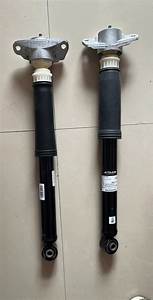
What Suspension components do
The suspension has two jobs: keep the tyre in contact with the road, and control how the body moves. Springs carry the load, dampers control the rate at which the spring releases its energy, and the locating links — control arms, ball joints and bushings — hold the wheel at the correct angles through that movement. When any of the three is compromised, braking distances lengthen and tyre wear accelerates.
On the road, most suspension part numbers turn on three questions: is the part handed left or right, is it a strut or a plain damper, and does the vehicle have electronically adjustable damping. Handedness catches out more buyers than anything else, because a control arm can look symmetrical while the ball joint taper and bushing spacing are mirrored. Adaptive dampers are the second trap: they carry an electrical connector and a solenoid, and a conventional damper will bolt in but will leave the vehicle in fault with a suspension warning light. Ride height and load rating vary too — commercial and pickup variants of a platform run stiffer rear damping and different mounting hardware to the passenger versions.
Control Arm
A control arm (wishbone) locates the hub carrier relative to the subframe and sets the geometry the wheel moves through. It carries rubber or hydraulic bushings at the inboard end and, on most designs, a ball joint at the outboard end. Many are sold complete with bushings and ball joint fitted.
- A knock or clunk from one corner over bumps and speed humps.
- Vague, wandering steering and a wheel that will not hold alignment settings.
- Uneven tyre wear across the tread — feathering on the inner or outer shoulder.
Specify upper or lower, front or rear axle, left or right (many arms are handed), whether the ball joint is integral or separate, and the bushing type. A wheel alignment is required after replacement; budget for it.
Shock Absorber
A shock absorber (damper) converts suspension movement into heat so the spring stops oscillating after one cycle. Twin-tube dampers are the common design; monotube units run higher gas pressure and shed heat better. Where the damper forms part of the suspension leg and locates the hub, it is a strut, and it will usually be supplied with a different mounting arrangement to a plain shock.
- The body continuing to float or bounce after a bump instead of settling in one movement.
- Pronounced nose dive under braking and body roll in corners.
- Cupped or scalloped tyre wear — the tyre is skipping rather than staying loaded.
Specify axle, whether the part is a strut or a plain damper, the mounting type at each end (eye, pin, stud or fork), extended and compressed lengths, and whether the vehicle has electronically adjustable damping — an adaptive damper cannot be replaced with a conventional one.
Checks to make before you order
A few minutes of inspection prevents most wrong-part returns in this category.
- Bounce test each corner: the body should settle within roughly one cycle. Continued oscillation means the damper is no longer controlling the spring.
- Look for an oil film running down the damper body, and for corrosion pitting on the exposed piston rod.
- Lever the control arm bushings with a bar while an assistant watches for movement, and check ball-joint boots for splits.
- Read the tyres. Cupping across the tread points at damping; feathering on one shoulder points at geometry, which points at bushings, arms or an alignment that has not been reset.
Identifying the right part by OEM number
An OEM number is the vehicle manufacturer's own part number for a component. It is normally printed, stamped or moulded onto the original part, or onto a label attached to it. Aftermarket manufacturers publish cross-references linking their own catalogue numbers to those OEM numbers, and that cross-reference is what makes an order verifiable rather than an educated guess.
Cross-referencing matters because a single model line rarely uses a single part. Over a production run a manufacturer will change suppliers, revise a design mid-life, fit larger brakes to a heavier or higher-output variant, and build market-specific versions with different lighting, sensors and emissions equipment. Two vehicles that look identical in a showroom photograph can therefore take different parts. The model name narrows the search; the OEM number closes it.
Suspension parts by vehicle
Jump straight to the suspension listings for a specific vehicle. Each model page also carries the sourcing notes for that vehicle.
Other part categories
Every category page covers what the components do, how they fail and what has to be specified when ordering.
Frequently asked questions about Suspension parts
Do shock absorbers have to be replaced in pairs?
Yes, per axle. A new damper on one side and a worn one on the other gives the axle asymmetric damping, which makes the vehicle unstable under braking and in mid-corner bumps. Replace both sides of an axle together even when only one has failed.
Is a strut the same thing as a shock absorber?
A strut is a damper that also forms a structural part of the suspension, locating the hub and usually carrying the coil spring and a top mount with a bearing. A plain shock absorber only damps. They are different parts with different mountings and are not interchangeable.
Do I need a wheel alignment after fitting control arms?
Yes. The control arm sets camber and, on many designs, caster. Fitting a new arm without resetting the alignment will wear a set of tyres out in a few thousand kilometres.
How do I tell if my vehicle has adaptive dampers?
Look for an electrical connector on the damper body itself and a menu on the instrument cluster offering ride-mode selection. If either is present, you need the electronically controlled part number; a passive damper will fit mechanically but will set a fault.
What do you need to quote suspension parts?
VIN, model year, which corner of the vehicle, whether the part is a strut or a shock, and whether the vehicle has adaptive damping. For control arms, say upper or lower and confirm the side. Photographs of the mounting ends are useful because mounting type varies within a model line.