Explore Electrical by vehicle brand
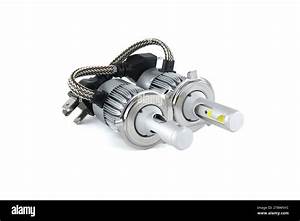
FAW Bestune T99 Headlight
FAW Bestune T99
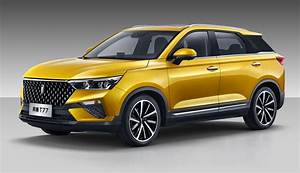
FAW Bestune T77 Starter Motor
FAW Bestune T77
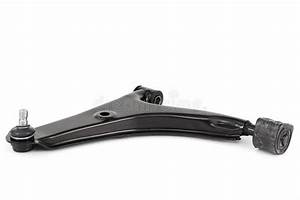
Dongfeng E70 Control Arm
Dongfeng E70
Dongfeng AX7 Starter Motor
Dongfeng AX7
JAC JS4 Control Arm
JAC JS4
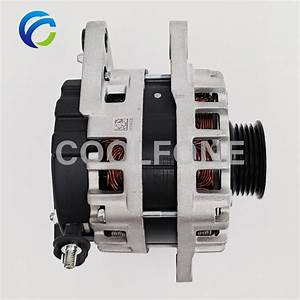
JAC S4 Alternator
JAC S4
SAIC (MG) MG RX5 Headlight
SAIC (MG) MG RX5
Great Wall Haval H9 Headlight
Great Wall Haval H9
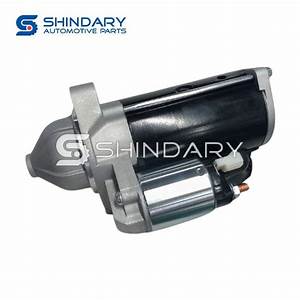
Great Wall Poer Starter Motor
Great Wall Poer
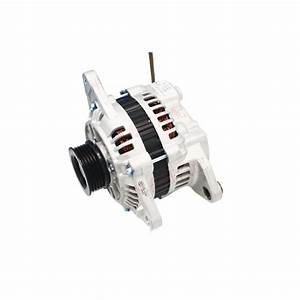
BYD Yuan Plus Alternator
BYD Yuan Plus
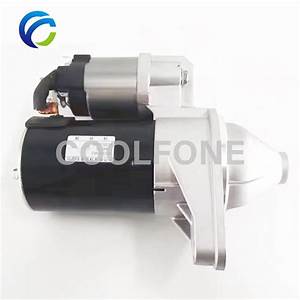
Great Wall Jolion Starter Motor
Great Wall Jolion
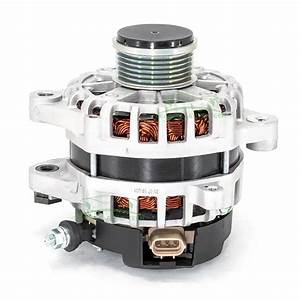
Great Wall Jolion Alternator
Great Wall Jolion
What Electrical components do
The alternator generates and regulates the vehicle's electrical supply, the starter motor cranks the engine, and the exterior lighting assemblies provide the beam pattern the vehicle was type-approved with. All three now commonly communicate with a control module rather than operating as standalone electromechanical devices.
Three specification traps account for most returns in this category. First, controlled alternators: many recent vehicles command charging voltage over a LIN bus so that the alternator can be loaded during deceleration and unloaded under acceleration. Fit a self-regulating alternator and the vehicle logs a communication fault. Second, stop-start starters: a vehicle that shuts its engine down at every set of lights may cycle its starter ten times as often as a conventional car, and standard-duty starters do not survive that. Third, headlights and drive side: beam patterns are asymmetric by design, throwing light further towards the kerb. A left-hand-drive headlight fitted to a right-hand-drive vehicle points that extra light into oncoming traffic and will fail a roadworthiness inspection.
Alternator
The alternator is a belt-driven three-phase generator with an internal rectifier bridge and voltage regulator. It supplies the vehicle's electrical load and recharges the battery. Many recent units are fitted with an overrunning (one-way) pulley to decouple the rotor from belt speed fluctuations, and some are commanded by the engine control module over a LIN bus rather than regulating themselves at a fixed voltage.
- A battery or charge warning light, or system voltage below roughly 13.5 V at idle with the engine warm.
- Headlights dimming and brightening with engine speed.
- Repeatedly flat batteries where the battery itself tests healthy.
Give the rated output in amps, the pulley type and rib count, the plug type, whether the unit is externally controlled (LIN or "smart charge") or self-regulating, and the mounting bracket geometry. Fitting a self-regulating alternator to a vehicle expecting a controlled one causes charging faults even though it physically bolts on.
Headlight
A headlight assembly comprises the housing, lens, reflector or projector optics, the light source (halogen bulb, HID burner or LED array), and increasingly a levelling motor, a daytime-running-light strip and a driver module. Sealed LED units are replaced as a complete assembly because the emitters are not serviceable.
- Standing water or persistent misting inside the lens.
- A dull, yellowed or crazed lens surface that no longer projects a sharp cut-off.
- Flicker, or one DRL segment out while the rest of the strip works.
Specify the side, the light-source technology, the connector pin count, whether a levelling motor is fitted, and — critically for road legality — whether the vehicle is left- or right-hand drive. Beam patterns are asymmetric and a left-hand-drive unit fitted to a right-hand-drive car will dazzle oncoming traffic. Some assemblies also need coding to the body module after fitting.
Starter Motor
The starter is a high-current DC motor with a solenoid that both throws the pinion into the flywheel ring gear and closes the main contacts. Vehicles with stop-start systems use reinforced or tandem-solenoid starters rated for far more cycles than a conventional unit.
- A single loud click and no crank — usually the solenoid pulling in but the main contacts not passing current.
- Slow, laboured cranking that does not improve with a known-good battery.
- A grinding or whirring noise, meaning the pinion is not engaging the ring gear cleanly. Inspect the ring gear before fitting a new starter or you will destroy the pinion again.
Confirm the battery, battery terminals and engine earth strap first — corrosion and a weak battery imitate starter failure and are far cheaper to fix. When ordering, give the power rating in kilowatts, the pinion tooth count, rotation direction, mounting bolt pattern and the number of mounting ears, and state whether the vehicle has stop-start.
Checks to make before you order
A few minutes of inspection prevents most wrong-part returns in this category.
- Measure charging voltage at the battery with the engine warm and idling, then again with headlights and blower on full. A healthy conventional system holds roughly 13.5 to 14.5 V; a controlled system will vary deliberately and needs a scan tool to assess properly.
- Before condemning a starter, load-test the battery and check the voltage drop across the main cable and the engine earth strap while cranking.
- On lighting faults, check the connector and the ground before the assembly. Corroded pins and poor earths produce flicker and dim output that look exactly like a failed unit.
- Count the pins on the connector of the part you are replacing and photograph it — pin count is the fastest way to identify which feature level of a part you need.
Identifying the right part by OEM number
An OEM number is the vehicle manufacturer's own part number for a component. It is normally printed, stamped or moulded onto the original part, or onto a label attached to it. Aftermarket manufacturers publish cross-references linking their own catalogue numbers to those OEM numbers, and that cross-reference is what makes an order verifiable rather than an educated guess.
Cross-referencing matters because a single model line rarely uses a single part. Over a production run a manufacturer will change suppliers, revise a design mid-life, fit larger brakes to a heavier or higher-output variant, and build market-specific versions with different lighting, sensors and emissions equipment. Two vehicles that look identical in a showroom photograph can therefore take different parts. The model name narrows the search; the OEM number closes it.
Electrical parts by vehicle
Jump straight to the electrical listings for a specific vehicle. Each model page also carries the sourcing notes for that vehicle.
Other part categories
Every category page covers what the components do, how they fail and what has to be specified when ordering.
Frequently asked questions about Electrical parts
My battery keeps going flat but tests fine. Is the alternator faulty?
Possibly, but confirm it. Measure charging voltage at the battery with the engine running and a load applied, and check for a parasitic drain with the vehicle asleep. A failed diode in the alternator rectifier can also feed alternating current back into the system, which a simple voltage reading may not reveal.
Does a replacement headlight need programming?
Some do. LED and adaptive units with a driver module or levelling motor are often registered to the body control module, and on those vehicles the new assembly needs coding with a scan tool before all functions work. Halogen reflector units generally do not.
Can I fit a higher-output alternator?
Physically, sometimes. Electrically, it must still match the vehicle's regulation method and pulley arrangement, and the existing wiring has to be rated for the extra current. If the standard alternator is failing to keep up, first check for an added load or a slipping belt rather than upsizing.
How do I know if my vehicle has a stop-start starter?
If the engine switches itself off when you stop and restarts when you release the brake or clutch, it has one, and it needs the reinforced part. Fitting a conventional starter to a stop-start vehicle produces an early, expensive failure.
What do you need to quote electrical parts?
VIN, model year, engine variant, and a photograph of the label on the existing unit — alternators and starters carry a rating plate with the output and the manufacturer's number. For headlights, confirm the drive side, the light source and the connector pin count.