Explore Brake System by vehicle brand

What Brake System components do

A hydraulic service brake converts pedal effort into line pressure, which pushes caliper pistons against pads, which clamp a rotating disc. Everything downstream of that — pad compound, disc mass, caliper size, cooling — exists to manage heat. A brake system that has stopped working properly has usually either run out of friction material or run out of the ability to get rid of heat.

The reason brake parts cannot be ordered by model name alone is that a single model line commonly runs two or three different brake packages. A higher-output engine variant, a heavier seven-seat body, a towing package or a market-specific specification will each justify a larger disc diameter and a different caliper, and the pad shape changes with the caliper. Pad sets also differ by whether they include an electrical wear sensor, and the sensor is model- and side-specific. This is why a supplier will ask for the disc diameter measured on the vehicle, or the number stamped on the old pad backing plate, before confirming a part.

Brake Discs

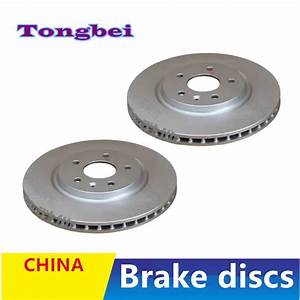
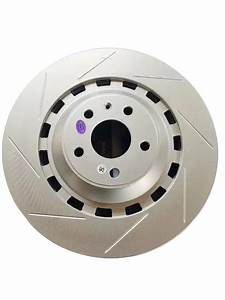
The brake disc (rotor) is the cast-iron surface the pads clamp. Vented discs have an internal vane structure that pumps air between two friction faces to shed heat; solid discs are used where thermal load is lower, typically on the rear axle of lighter vehicles.

  • Pulsing through the brake pedal and shimmy through the steering wheel as you slow from speed — thickness variation across the friction face.
  • A pronounced lip at the outer edge of the disc, which you can catch with a fingernail: that lip is the original thickness and shows how much has worn away.
  • Deep circular scoring, usually the result of running pads down to the backing plate.

Specify outer diameter, thickness when new, height, the bolt-hole count and pitch-circle diameter, the centre bore, and whether the disc is vented or solid. Front and rear discs on the same vehicle are rarely the same part.

Brake Pads

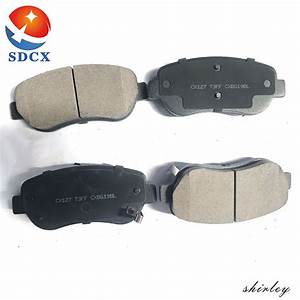
A brake pad is friction material bonded or riveted to a steel backing plate. The caliper piston presses the pads against the rotating disc, converting the vehicle's momentum into heat. Pads are consumable by design and are the most frequently replaced item on the braking system.

  • A high-pitched squeal that appears under light braking and disappears when you brake hard — usually the mechanical wear indicator touching the disc.
  • A harsh grinding noise: the friction material is gone and the backing plate is cutting the disc. At this point the discs almost always need replacing too.
  • Longer pedal travel, or a pedal that feels soft before it bites.

Specify the axle (front or rear), the disc diameter the caliper is sized for, whether the pads carry an electrical wear sensor, and the caliper manufacturer if it is cast into the body. Pads are always replaced as a complete axle set, never per wheel.

Checks to make before you order

A few minutes of inspection prevents most wrong-part returns in this category.

  • Measure pad friction material thickness at its thinnest point rather than judging by eye through the wheel.
  • Measure disc thickness with a micrometer at several points around the face and compare with the minimum thickness figure cast into the disc hub.
  • Check both pads on each caliper: a large difference between inner and outer pad wear means the caliper is not releasing and needs attention before new friction parts go on.
  • Inspect flexible hoses for bulges and the caliper piston boots for splits at the same time.

Identifying the right part by OEM number

An OEM number is the vehicle manufacturer's own part number for a component. It is normally printed, stamped or moulded onto the original part, or onto a label attached to it. Aftermarket manufacturers publish cross-references linking their own catalogue numbers to those OEM numbers, and that cross-reference is what makes an order verifiable rather than an educated guess.

Cross-referencing matters because a single model line rarely uses a single part. Over a production run a manufacturer will change suppliers, revise a design mid-life, fit larger brakes to a heavier or higher-output variant, and build market-specific versions with different lighting, sensors and emissions equipment. Two vehicles that look identical in a showroom photograph can therefore take different parts. The model name narrows the search; the OEM number closes it.

Frequently asked questions about Brake System parts

Do brake pads and discs have to be replaced together?

Not always, but they usually should be. If the discs are above their minimum thickness figure, have an even surface with no significant lip, and show no pulsation, new pads alone are acceptable. If the pads were run down to the backing plate, or the disc has visible scoring or a pronounced wear lip, fit both — new pads on a worn disc face will never bed properly and will judder.

Can I fit pads for a different trim level of the same model?

Only if the caliper is the same. Higher-output or heavier variants of the same model frequently use a larger disc and a correspondingly larger caliper, and those pads will not fit a smaller caliper. Confirm by measuring the disc diameter or by quoting the number stamped on the existing pad backing plate.

Why do my new discs rust so quickly?

Cast iron surface-rusts within hours in humid air, and it normally cleans off in the first few stops. Rust that persists is a sign the friction brakes are barely being used — common on hybrids and battery-electric vehicles where regenerative braking does most of the deceleration — or that a caliper is not applying at all on that corner.

What is the difference between vented and solid discs?

A vented disc has two friction faces separated by internal vanes that pump cooling air through the middle. It carries more mass and sheds heat far better, so it is used where thermal load is highest, normally the front axle. A solid disc is a single casting, lighter and cheaper, and is common on the rear axle of smaller vehicles.

What do you need from me to quote brake parts?

The VIN, the model year, the axle, and either the disc diameter measured across the friction face or the reference stamped on the part you are replacing. If the pads have a wear sensor, say so. Photographs of the caliper and the old pad backing plate resolve most remaining ambiguity.

Request Quote